About us
October 20, 2020 2026-09-10 5:32About us
Our Team
The method behind CTLM is built and carried forward by people who have spent their careers in classrooms — not just designing curriculum, but teaching it.
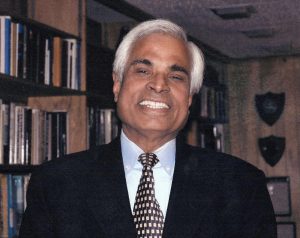
Prof. Mahesh C. Sharma
Professor Mahesh C. Sharma is the founder and President of the Centre for Teaching/Learning of Mathematics, Inc. of Framingham, Massachusetts, USA, and Berkshire Mathematics in Reading, England. Berkshire Mathematics extended his work across the UK and Europe, and the same mission now continues in India through CTLM, with the shared aim of helping every child, regardless of background or learning difficulty, realise their full potential in mathematics.
His academic career spans more than four decades. He is the former President and Professor of Mathematics Education at Cambridge College, where he taught mathematics and mathematics education for over thirty-five years to both undergraduate and graduate students, training teachers from many countries who went on to carry his methods into their own classrooms. In 2011, recognising how underserved the field was, he set up and chaired the British Dyslexia Association's first subcommittee dedicated to dyscalculia, helping formalise it as an area of serious research and clinical attention in the UK. He later received the BDA's Marion Welchman International Award, given for lifetime contribution to the field.
Professor Sharma's research has centred on how children actually learn mathematics, and why so many do not, particularly through the lens of dyscalculia and other specific learning disabilities. This research became the foundation for the CPVA/S method, which he built himself and continues to refine today: a model that carries a learner from concrete, hands-on experience of a mathematical idea through pictorial representation, mental visualisation, and finally abstract, symbolic understanding, bound together by the precise language a student learns to use at every step. Where most existing frameworks stopped at Concrete-Pictorial-Abstract, Professor Sharma identified visualisation as the missing bridge, the point where a child moves from needing an object in front of them to being able to hold and manipulate its image purely in the mind.
He has published extensively in service of this work. He was the Chief Editor and Publisher of Focus on Learning Problems in Mathematics, an international, interdisciplinary research journal read in more than 90 countries, and continues today as Editor of The Math Notebook, a practical, ongoing resource written specifically for parents and teachers rather than academics alone. He is co-author, with Steve Chinn and Sanjay Raghav, of Dyscalculia and Numeracy: New Strategies for Helping Dyscalculic Students Master Math, which formally introduces the CPVA/S model to a wider clinical and academic readership, alongside diagnostic tools for early intervention and practical classroom strategies.
Beyond publishing, he has consulted directly with schools and been an invited speaker to educational organisations across the Americas, Europe, Asia, and Africa, carrying his approach well beyond any single country's classrooms. He continues to provide direct evaluation and tutoring for children and adults with learning disabilities in mathematics, and works closely with teachers and school administrators to design curriculum and instructional strategies suited to every kind of learner, not only those who already find mathematics easy. He remains a firm believer that numeracy, like literacy, is a milestone every child can and should reach: just as a child is expected to read fluently with comprehension by the end of third grade, he holds that every child should master numeracy with real understanding by the end of fourth grade, and that once they do, mathematics at every level beyond becomes accessible.

Sanjay Raghav
Sanjay Raghav holds an MSc in Mathematics Education from the Cluster Innovation Centre, University of Delhi, and an MA in Education from Ambedkar University Delhi, where he received a merit scholarship for his academic progress. He also qualified the National Eligibility Test (NET) conducted by CBSE. Over nearly a decade in the classroom, he has taught mathematics to more than 20,000 students across schools, NGOs, and independent coaching centres, working with learners across the Indian and international boards alike.
Sanjay's interest in mathematics education extends into research and writing. He has presented and published papers at national mathematics conferences organised by NCERT, examining the gaps in pre-primary mathematics teaching and the competencies young children bring into the classroom. Alongside his teaching, he has mentored more than 10,000 teachers, helping them build stronger conceptual understanding and more effective classroom practice.
As Chief Operations Officer and educator at CTLM, Sanjay works to bring the CPVA/S method into classrooms across India. He trains teachers, develops curriculum and assessment resources, and consults with Indian and international schools on their mathematics curriculum, alongside institutions including UNICEF's Centre for Early Childhood Education and Development and the Language and Learning Foundation. Alongside Professor Mahesh Sharma, he co-authored a book on dyscalculia and has helped organise teacher trainings with him across India, building on his own published research into the early gaps children face in learning mathematics.
He served as adjunct faculty at the School of Education Studies, Ambedkar University Delhi, teaching algebra and geometry to graduate students in education. Alongside his work with teachers, Sanjay continues to work directly with students, providing tutoring to children struggling with mathematics and conducting sessions for gifted students through both online and offline programs.